A smile can be healthy and still leave you wishing a few details looked different. Maybe one front tooth is darker after an old injury, small gaps draw your eye in photos, or worn edges make your teeth appear shorter than they once did. Dental veneers can address these concerns with a treatment that is highly customized, but they are not a one-size-fits-all answer. The right result begins with an honest conversation about what you want to change and what your teeth need to stay healthy.
What Are Dental Veneers?
Dental veneers are thin, custom-made shells that bond to the front surface of teeth. They are usually made from porcelain, although composite resin veneers may be appropriate in certain situations. By changing the visible front of a tooth, veneers can improve its color, shape, size, alignment, or proportion within your smile.
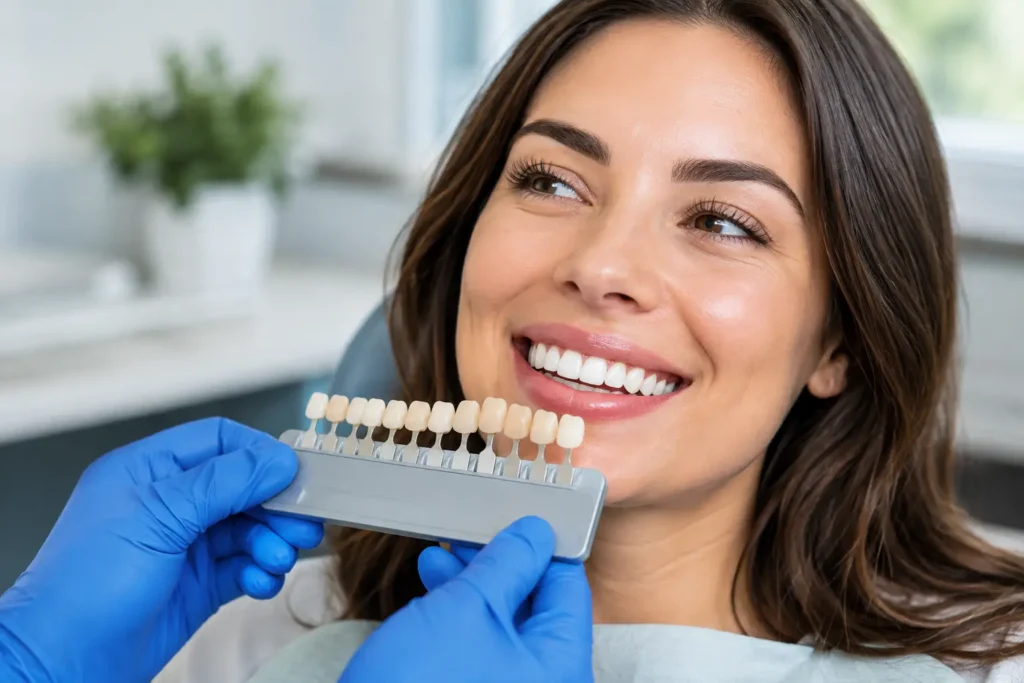
Porcelain is a popular material because it reflects light in a way that resembles natural enamel and resists staining better than composite material. A skilled dentist selects the shade, translucency, and contours carefully, so veneers complement your facial features and neighboring teeth rather than looking overly white or artificial.
Veneers are most often placed on the teeth that show when you smile. Some patients choose one or two veneers to correct a specific concern, while others choose several to create a more balanced smile. The number is never just a cosmetic decision. It should reflect your bite, the condition of your teeth, and the look you hope to achieve.
What Veneers Can Improve
Veneers are designed for aesthetic changes, especially when several small concerns affect the overall appearance of a smile. They may be a good option for teeth with stubborn discoloration that whitening cannot fully improve, minor chips or uneven edges, small gaps, irregular tooth shapes, or mild visual misalignment.
They can also help restore a sense of symmetry. For example, a naturally small lateral incisor beside larger front teeth can make a smile feel uneven. A veneer may adjust that tooth’s width and shape in a conservative, natural-looking way.
That said, veneers do not treat every dental concern. A tooth with significant decay, a deep crack, or extensive existing filling material may need a crown instead. Active gum disease must be treated before cosmetic work begins. If teeth are severely crowded or your bite places excessive pressure on the front teeth, clear aligners, restorative treatment, or a combination of care may be the healthier first step.
The Veneer Process Should Feel Personal
A beautiful result is not created by selecting a shade from a chart alone. It comes from thoughtful planning. Your dentist will begin by examining your teeth, gums, bite, and existing restorations. Digital images, X-rays, and photographs may be used to understand what is happening beneath the surface as well as what you see in the mirror.
The next conversation is just as important. Some patients want a subtle refinement that still looks distinctly like their natural smile. Others want a brighter, more dramatic change. Both goals can be valid, but clear communication helps prevent surprises. Bring up photos, concerns about tooth size, and anything you do not like about past dental work. Your dentist should listen without rushing you toward a treatment plan.
For traditional porcelain veneers, a small amount of enamel is often shaped away to create room for the veneer. Impressions or digital scans are then used to design the restorations. You may wear temporary veneers while the final porcelain veneers are being made. At the placement visit, the dentist checks the fit, color, bite, and appearance before bonding each veneer securely into place.
Some patients ask about no-prep or minimal-prep veneers. These can be excellent choices when there is enough space and the tooth position allows it. They are not automatically better for every smile, however. Adding material without proper planning can make teeth look bulky or affect how your bite feels. A conservative approach means preserving healthy tooth structure whenever possible while still creating a result that functions well.
Porcelain vs. Composite Veneers
Porcelain and composite veneers both improve the appearance of teeth, but they differ in durability, appearance, cost, and treatment time.
Porcelain veneers are fabricated in a dental laboratory and are known for their lifelike finish and stain resistance. With good care, they can last many years. They generally involve a greater investment and often require more than one appointment, but many patients appreciate their strength and polished appearance.
Composite veneers use tooth-colored resin applied and sculpted directly on the teeth. They can often be completed in one visit and may require less enamel preparation. Composite is typically more affordable upfront, but it is more likely to stain, chip, or lose its surface shine over time. It may need maintenance or replacement sooner than porcelain.
The best material depends on your goals, your budget, the condition of your teeth, and how long you want the result to last. An ethical recommendation should explain both options clearly, including what each choice cannot do.
Are Veneers Permanent?
Porcelain veneers are durable, but they are not permanent in the sense that they last forever. Because enamel is commonly adjusted during preparation, the treated teeth will usually need veneers or another restoration in the future. Over time, a veneer may need to be replaced because of normal wear, chipping, gumline changes, or damage.
This is why the decision deserves careful thought. Veneers can be a long-term, confidence-building investment, but they should not be presented as a casual or reversible makeover. A dentist who values your trust will discuss the commitment openly and make sure you understand how the treatment fits into your long-term dental health.
Caring for Your Veneers
Veneers do not require complicated care, but they benefit from consistent habits. Brush twice daily with a nonabrasive toothpaste, clean between your teeth every day, and keep up with regular exams and cleanings. Healthy gums are essential because the gumline frames every veneer.
Porcelain resists stains, but the natural teeth beside veneers can still change color. Coffee, tea, red wine, tobacco, and deeply pigmented foods may affect your surrounding enamel over time. Whitening does not change the color of porcelain, so it is often wise to discuss whitening before the final veneer shade is selected.
If you clench or grind your teeth, a custom nightguard can protect both your veneers and natural teeth. Avoid using your teeth to open packages, bite nails, or chew hard objects such as ice. Veneers are strong enough for normal eating, but they are not meant to be tools.
Questions Worth Asking Before You Decide
Before moving forward, ask what is causing the concern you see in your smile and whether there are more conservative options. Whitening, bonding, orthodontics, or a single crown may be more appropriate in some cases. Ask how much enamel preparation is expected, what material is recommended and why, how your bite will be evaluated, and what future maintenance could look like.
It is also reasonable to ask to see examples of work with a similar starting point and similar goals. The most convincing cosmetic dentistry should look believable, not identical from person to person. Your smile should suit you.
At A+ Family Dental Solutions, cosmetic recommendations are approached with the same care as restorative treatment: by listening first, evaluating your oral health thoroughly, and explaining your options without pressure. A veneer plan should feel comfortable not only when you see the final result, but also when you understand how and why it was designed.
The best next step is a personal consultation where you can talk openly about what you see, what you hope to change, and what matters most to you. A thoughtful plan can help you move toward a smile that feels polished, healthy, and genuinely your own.