A cracked tooth rarely chooses a convenient moment. You may be trying to finish a workday, manage school pickup, or simply eat without flinching when your dentist recommends a crown. The same day crown patient experience is designed to replace the usual wait for a permanent restoration with one carefully planned visit, while still protecting what matters most: the health, function, and natural appearance of your tooth.
For many patients, the biggest relief is not just receiving a crown sooner. It is knowing what will happen, why it is needed, and that they will be treated with respect throughout the process. A same-day crown can be an excellent option for a damaged or weakened tooth, but the right choice should always be based on your specific bite, tooth structure, goals, and oral health.
What a Same Day Crown Visit Actually Feels Like
A same-day crown appointment is more involved than a routine filling, but it is typically less disruptive than the traditional crown process. Rather than taking a physical impression, placing a temporary crown, and asking you to return weeks later for the final restoration, your dental team designs and creates the crown in the office.
Your visit begins with a conversation. Your dentist will review the reason a crown is being considered, whether it is a large fracture, a worn-down tooth, a failing filling, significant decay, or protection after root canal treatment. X-rays and an exam help determine whether the tooth and surrounding tissues are healthy enough for a crown.
This discussion matters. A crown should not be recommended simply because it is the fastest available treatment. In some situations, a more conservative restoration may be appropriate. In others, a tooth may need additional treatment before it can be restored. Clear, ethical recommendations give you the confidence to make an informed decision.
Comfort Comes First
Once you are ready to proceed, the tooth and surrounding area are numbed. Most patients feel pressure and vibration during preparation, not sharp pain. If dental treatment makes you nervous, tell your team before the appointment begins. Small details, such as taking breaks, explaining each step before it happens, and checking on your comfort, can change the entire experience.
Your dentist gently reshapes the tooth so the crown can fit securely over it. The amount of shaping depends on the existing tooth structure and the material being used. The goal is to preserve as much healthy tooth as possible while creating enough room for a durable, natural-looking restoration.
Digital Scans Replace Goopy Impressions
For many patients, digital scanning is one of the most welcome parts of the same-day crown experience. A small intraoral scanner captures detailed images of the prepared tooth, nearby teeth, and bite. There is no need to sit with a tray of impression material in your mouth for several minutes.
The scan creates a digital model that allows your dentist to plan the crown with precision. Your bite is especially important. A crown that is even slightly too high can make chewing uncomfortable and place extra pressure on the tooth, jaw muscles, or surrounding teeth.
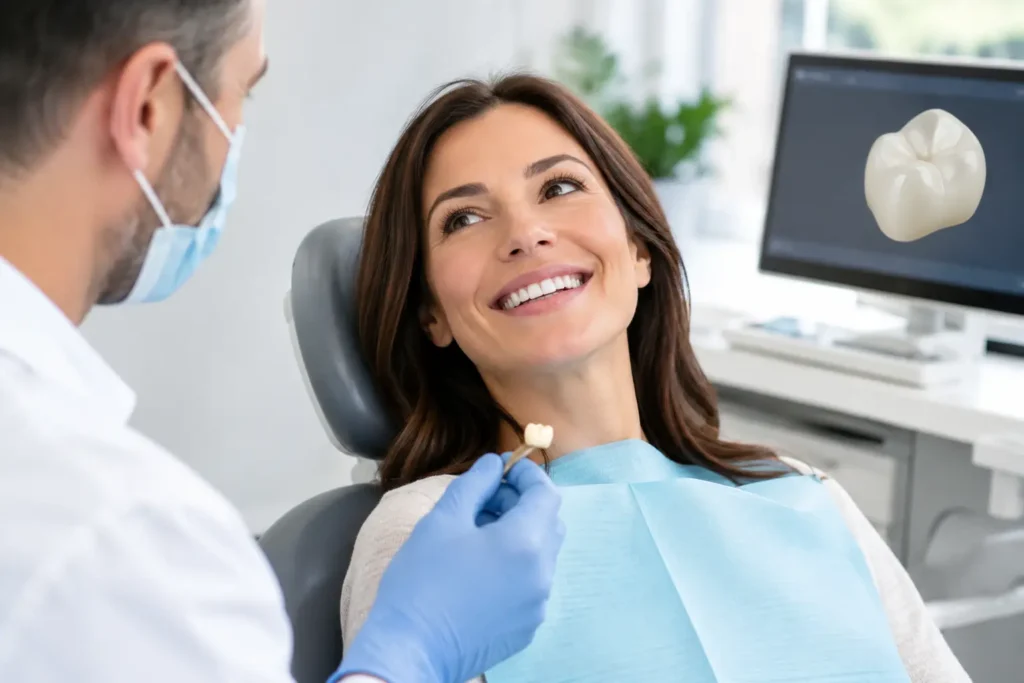
You may be able to see images of your tooth and the proposed restoration on a screen. This is more than a technology feature. It gives you a better understanding of your care and creates an opportunity to ask questions about the crown’s shape, color, and purpose.
Designing a Crown for Your Smile and Bite
Your dentist designs the crown to function with the way you naturally close and chew. The restoration is then milled from a high-quality ceramic material in the office. While the crown is being created, you can usually rest comfortably rather than leave with a temporary restoration.
This waiting period varies by case, but it is generally part of the same appointment. Your team may make adjustments to the design before milling or after trying in the finished crown. That attention to detail is worth the extra time. A crown is not simply a cap for a tooth. It needs to support a healthy bite and blend naturally with your smile.
Color matching also deserves an honest conversation. Ceramic crowns can look remarkably lifelike, particularly when matched to surrounding natural teeth. Still, if you are considering whitening or larger cosmetic changes, it is best to discuss those plans before selecting the final crown shade. A crown does not whiten the way natural enamel can.
The Final Placement and Bite Check
When the crown is ready, your dentist will try it in and evaluate the fit around the edges of the tooth. A close, precise fit helps limit areas where bacteria can collect. The crown is also checked against nearby teeth and your bite.
You will be asked to bite down, slide your teeth, and describe how it feels. This is the moment to speak up if anything feels uneven, bulky, or unfamiliar. Minor adjustments are normal and should be addressed before the crown is bonded into place.
After final approval, the crown is permanently bonded. You leave with your completed restoration, without the usual period of being careful around a temporary crown or returning for a separate placement visit. For busy adults and families in Gilbert, Mesa, and Chandler, that convenience can make needed restorative care feel much more manageable.
What You May Feel After a Same-Day Crown
It is common for the numbness to linger for a few hours. Avoid chewing until it has fully worn off so you do not accidentally bite your cheek, tongue, or lip. Your tooth and gums may feel mildly tender after preparation, especially if the tooth was already inflamed or sensitive before treatment.
Some people notice temporary sensitivity to temperature or pressure for a few days. This should gradually improve. A crown may feel different at first because it is new, but it should not cause persistent pain or make it difficult to chew.
Call your dental office if you experience ongoing pain, a bite that feels high, swelling, or a crown that feels loose. These concerns are not something you should simply tolerate. Prompt adjustments protect your comfort and help the restoration perform as intended.
Same-Day Crowns Have Trade-Offs, Too
Same-day technology is valuable, but it is not automatically the best approach for every tooth. Complex cases can require additional planning, specialized materials, or a laboratory-made restoration. Front teeth with highly specific cosmetic demands, extensive bite issues, or cases involving multiple connected teeth may call for a different process.
The condition of the tooth matters as well. If there is deep decay, infection, gum disease, or a fracture extending below the gumline, those concerns need to be addressed first. Speed should never take priority over diagnosing the problem correctly.
The best patient experience comes from a dentist who explains both the benefits and the limits. At A+ Family Dental Solutions, that means recommending same-day treatment when it supports a healthy, long-lasting result, not simply because it is available.
Caring for Your Crown Over Time
A crown still needs daily care because the tooth underneath and the gumline around it remain vulnerable to plaque and decay. Brush twice daily with fluoride toothpaste, clean between your teeth every day, and keep regular dental exams and cleanings. If you grind or clench your teeth, a custom night guard may help protect both your crown and your natural enamel.
Avoid using your teeth to open packages or chew hard non-food items. Ceramic is strong, but no crown is indestructible. With good home care and professional monitoring, a well-made crown can support comfortable chewing and a confident smile for many years.
A damaged tooth can feel like one more thing you do not have time to handle. Thoughtful same-day crown care turns that concern into a clear plan, giving you the time, explanations, and personal attention needed to leave with a tooth that feels like it belongs in your smile.