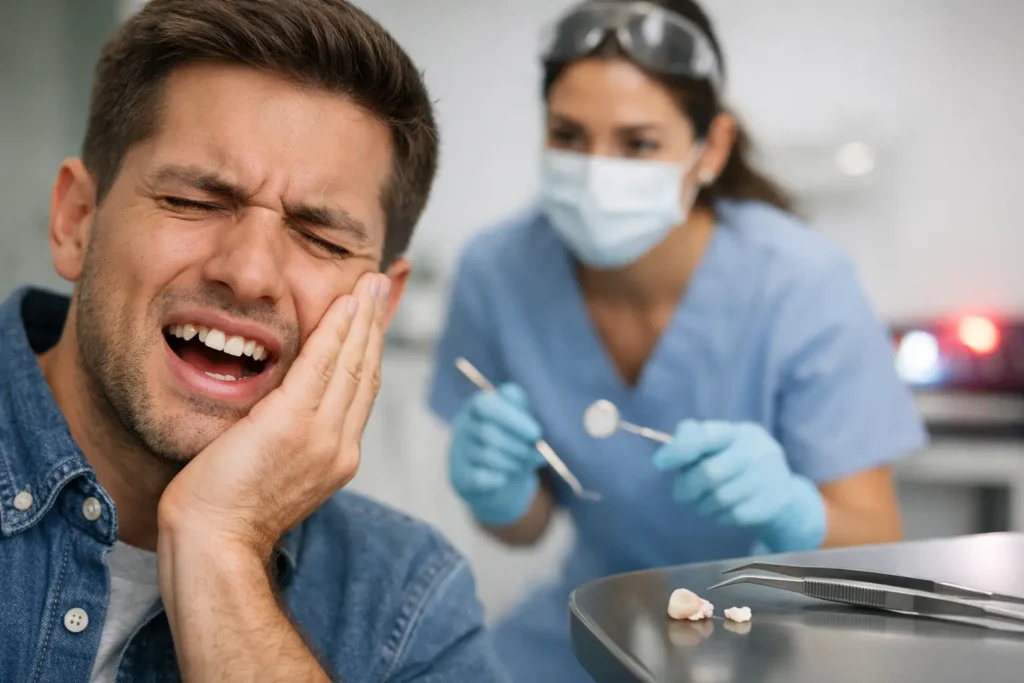
A broken tooth rarely happens at a convenient time. One bite into a hard snack, a sports injury, or an old filling giving way can leave you in pain and wondering whether you need care now or if it can wait until morning. If you are searching for an emergency dentist for broken tooth treatment, the most important thing to know is this: quick action can make a real difference in saving tooth structure, reducing pain, and preventing a more serious infection.
Some broken teeth are obvious emergencies. Others look minor at first but worsen fast once the inner layers of the tooth are exposed. Knowing what to do in the first few minutes, and what a dentist will look for once you arrive, can help you make a calm, confident decision.
When a broken tooth is a dental emergency
Not every chip needs same-day care, but many broken teeth do. The difference usually comes down to pain, bleeding, exposed nerves, sharp edges, and how much of the tooth has been lost.
A small cosmetic chip without pain may be able to wait a short time. A larger break, especially one that causes sensitivity to air, pressure, heat, or cold, should be evaluated quickly. If the tooth is cracked below the surface, the damage may be more extensive than it appears in the mirror.
You should treat it as urgent if you have significant pain, swelling, bleeding that does not stop, a loose or displaced tooth, or a large piece of missing tooth structure. It is also urgent if the broken area has left a jagged edge that is cutting your tongue or cheek, or if you can see a pink or red center inside the tooth. That can mean the pulp, where the nerve and blood supply live, is exposed.
What to do before you see an emergency dentist for broken tooth care
Start by rinsing your mouth gently with warm water. This helps clear away debris and lets you see the area better. If there is bleeding, apply light pressure with clean gauze. If your face is swelling, hold a cold compress against the outside of your cheek in short intervals.
If you can find the broken piece, save it. Place it in a clean container. Sometimes it can help your dentist assess the break, even if it cannot be reattached. Avoid chewing on that side, and stay away from very hot, very cold, crunchy, or sticky foods. If the edge is sharp, dental wax or sugar-free gum can help cover it temporarily so your soft tissue is protected on the way to the office.
Over-the-counter pain relief may help, but it is best to follow label directions and avoid placing aspirin directly on the gum. That can irritate the tissue. If the tooth was injured during a fall, sports accident, or car accident, and you may also have a head or jaw injury, medical evaluation may need to come first.
Why broken teeth should not be ignored
Teeth do not heal the way skin does. Once enamel and dentin are fractured, the weakened area is more vulnerable to bacteria, additional breakage, and nerve irritation. What starts as a manageable repair can become a root canal or extraction if treatment is delayed too long.
There is also the issue of bite pressure. Every time you chew, a cracked or broken tooth absorbs force unevenly. A tooth that felt merely sensitive on day one can split further a few days later. In some cases, the damage reaches below the gumline, which can limit repair options.
That does not mean every broken tooth leads to major treatment. It does mean timing matters. Early care often gives your dentist more conservative options and a better chance of preserving the natural tooth.
How a dentist evaluates a broken tooth
When you come in for emergency care, the first goal is to get you comfortable and determine how deep the damage goes. That usually includes an exam, digital imaging, and a discussion of how the injury happened and what symptoms you are feeling.
Your dentist will want to know whether the tooth hurts on contact, whether pain lingers after temperature changes, and whether the tooth feels loose or different when you bite down. These details help distinguish between a simple chip, a deep fracture, a damaged filling or crown, and a crack extending toward the root.
The appearance of the tooth is only part of the story. Some of the most painful fractures are not easy to see without magnification or imaging. This is one reason a compassionate, detail-oriented office matters. You want a team that takes time to explain what they see, what can be fixed now, and what should be monitored over time.
Common treatments for a broken tooth
The right treatment depends on the size and location of the break, whether the nerve is involved, and whether the tooth can still be predictably restored.
For small chips or worn edges, dental bonding can often smooth and rebuild the tooth in a natural-looking way. If more structure is missing, a crown may be the best option to protect the remaining tooth and restore full function. For busy families and working adults, same-day crown technology can be especially helpful because it reduces the need for multiple visits.
If the break has reached the pulp, root canal therapy may be recommended before the tooth is sealed with a crown. This sounds intimidating to many patients, but the purpose is straightforward: remove inflamed or infected tissue, relieve pain, and save the tooth when possible.
Sometimes the tooth is too severely broken to restore safely. If the fracture extends deep below the gumline or splits the root, extraction may be the healthiest choice. In those cases, your dentist should also talk with you about replacement options so your long-term bite and smile are protected, not just the immediate problem.
It depends on the type of break
A chipped front tooth and a fractured molar are both broken teeth, but they are not managed the same way. Front teeth often involve appearance as well as function, so repairs need to blend naturally with the rest of the smile. Back teeth handle heavy chewing forces, which means durability becomes the priority.
It also depends on whether the tooth had previous dental work. A tooth with a large old filling may break differently than a healthy tooth injured in an accident. In some cases, replacing a failing filling with a crown is enough. In others, the underlying tooth is already compromised.
This is where ethical treatment matters. Patients deserve a clear explanation of what is necessary, what is optional, and why one approach may last longer than another. A boutique family practice like A+ Family Dental Solutions is often a good fit for this kind of conversation because the focus is on individualized care, not rushed decisions.
How to protect the tooth after treatment
Once the immediate problem is addressed, the next step is preventing a repeat injury or a failed repair. If you grind your teeth, a custom night guard may be recommended. If the break happened while chewing ice, hard candy, or popcorn kernels, changing those habits can protect both natural teeth and restorations.
If sports caused the injury, a properly fitted mouthguard is worth taking seriously. And if the broken tooth was the result of decay under an old filling or crown, regular exams become even more important. Many dental emergencies are easier to prevent than to fix.
It is also wise to pay attention to symptoms after repair. Mild sensitivity can happen, but lingering pain, bite discomfort, or swelling should be checked promptly. Follow-up care is part of doing the job well.
Choosing the right emergency dentist for broken tooth treatment
When you are in pain, convenience matters. So do experience, technology, and trust. The best emergency dental care is not only fast. It is careful, respectful, and focused on what will serve you well after the emergency is over.
Look for a dentist who offers comprehensive care under one roof, explains your options clearly, and does not push treatment you do not need. If a same-day restoration is possible, that can save time and help stabilize the tooth faster. If it is not the right choice for your situation, you should hear that honestly too.
A broken tooth can feel overwhelming in the moment, especially if it happens to your child, before work, or late in the week. But with prompt care and a team that combines advanced treatment with genuine compassion, this is often a problem that can be handled more smoothly than you expect.
If your tooth breaks, trust your instincts. Pain, sharp edges, swelling, or a major crack are good reasons to call right away, because saving a tooth is often easier when you do not wait for it to get worse.