A cracked tooth rarely shows up at a convenient time. Maybe you bit down on something hard at lunch, noticed a sharp edge in the mirror that night, or finally decided that an old crown needed attention. When that happens, understanding how same day crowns work can make the decision feel a lot less stressful.
Same-day crowns are designed to restore a damaged tooth in one visit instead of two or more. That means no messy traditional impressions, no temporary crown for a couple of weeks, and no extra appointment just to finish the job. For busy parents, working professionals, and anyone who wants treatment handled efficiently and carefully, that difference matters.
How same day crowns work
A same-day crown is a custom dental crown made and placed during a single appointment. The process uses digital imaging, computer-guided design, and in-office milling technology to create a crown that fits your tooth without sending the case out to an outside lab.
The goal is the same as a traditional crown. Your dentist is protecting and strengthening a tooth that has been weakened by a large cavity, a fracture, wear, or a root canal. The difference is mostly in how the crown is made and how quickly you can get back to eating, speaking, and smiling comfortably.
What happens during the appointment?
The visit usually starts with an exam and imaging to confirm that a crown is the right solution. Not every damaged tooth needs one, and ethical treatment matters here. Sometimes a filling or another restoration may be enough. If the tooth needs full coverage and support, the crown process moves forward.
Next, the tooth is prepared. This means the dentist gently shapes the outer portion of the tooth so the crown can fit over it properly. If there is decay or an old filling that needs to be removed, that is done first. The goal is to preserve as much healthy tooth structure as possible while creating a stable foundation.
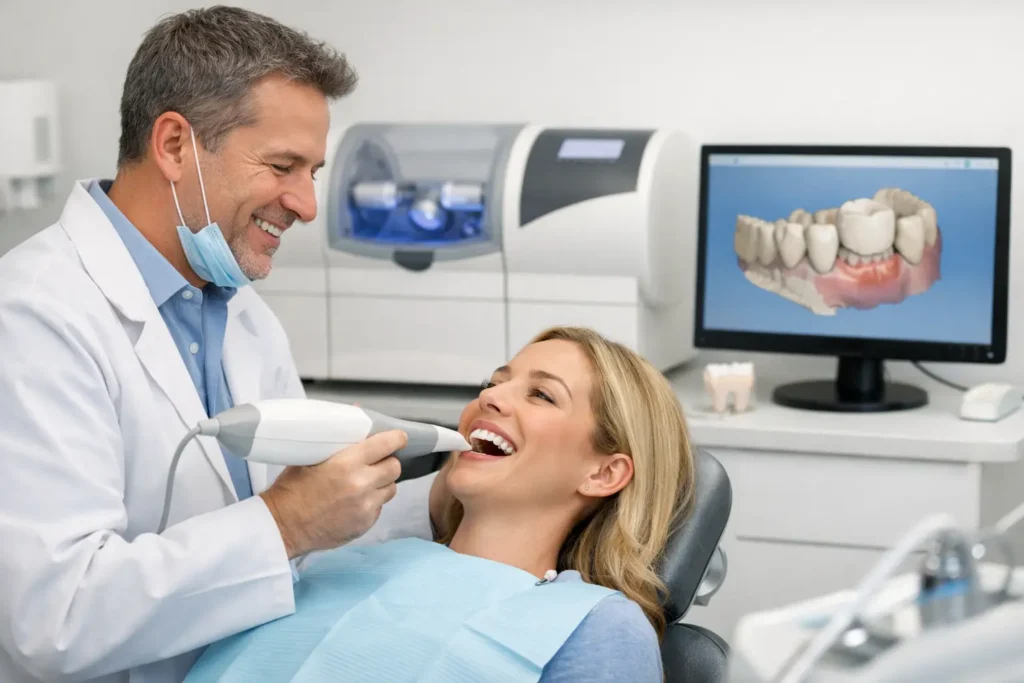
Instead of using traditional putty impressions, the dentist takes a digital scan of your tooth and surrounding bite. This scan creates a highly detailed 3D image. Patients often appreciate this step because it is faster, cleaner, and more comfortable than impression trays.
Once the scan is complete, the crown is designed on a computer. The dentist reviews the shape, contours, and bite so the final restoration blends with your smile and functions naturally. That design is then sent to an in-office milling machine, which carves the crown from a solid block of ceramic.
After milling, the crown may be polished, stained, or adjusted for a more natural look. The dentist then tries it in, checks the fit and bite, and bonds it into place. In many cases, you leave the office with your permanent crown the very same day.
Why digital scanning changes the experience
One reason patients ask how same day crowns work is because the process sounds almost too convenient. The technology is what makes it possible.
Digital scans allow the dentist to capture fine details with impressive accuracy. That matters because a crown has to do more than look good. It has to fit snugly, protect the tooth, and allow your bite to come together comfortably. A well-made crown helps reduce the chances of annoying high spots, food traps, or a fit that feels off.
The digital workflow also gives the dentist more control. Instead of packaging up impressions and waiting on an outside lab schedule, the design and fabrication happen in the office. That can shorten treatment time and make the process more predictable.
Are same-day crowns as strong as traditional crowns?
Often, yes. Same-day crowns are commonly made from durable ceramic materials that are well suited for many front and back teeth. They are designed to handle normal chewing forces while also offering a natural, tooth-colored appearance.
That said, the best material depends on the tooth, your bite, and your habits. If you grind your teeth, have a very heavy bite, or need a crown in a high-stress area, your dentist may talk with you about which option makes the most sense. Convenience is valuable, but long-term success matters more.
This is where personalized care becomes important. The right answer is not always the fastest one. A trustworthy dentist will recommend same-day treatment when it fits your clinical needs, not just because the technology is available.
The biggest benefits of same-day crowns
The most obvious benefit is time. You can often complete treatment in one appointment instead of taking off work or rearranging your family schedule twice. For many patients in Gilbert and nearby communities, that alone is a major advantage.
There is also the comfort factor. Digital scans are easier for many people than traditional impressions, especially if you have a strong gag reflex or dental anxiety. And because you receive the final crown right away, you usually avoid wearing a temporary crown that can loosen, break, or feel awkward.
Same-day crowns can also be a good fit for patients who want a more streamlined experience. Fewer appointments often means fewer disruptions and less waiting between the problem and the solution.
When same-day crowns may not be the best choice
Even excellent technology has limits. Some cases still benefit from a traditional lab-made crown. If the tooth has a very complex shape, if multiple restorations need to be coordinated, or if the cosmetic demands are especially high in a visible area, a custom lab process may offer more layering or shade detail.
There are also situations where the condition of the tooth needs to be stabilized first. For example, if a tooth has deep decay near the nerve or signs of infection, other treatment may need to happen before a crown is placed.
A careful dentist should explain these trade-offs clearly. Fast treatment should never replace thoughtful diagnosis.
How long do same-day crowns last?
Like traditional crowns, same-day crowns can last many years with good care. Longevity depends on the health of the tooth underneath, the quality of the bite, oral hygiene habits, and whether you clench or grind.
Brushing, flossing, and regular dental visits still matter. A crown cannot get a cavity, but the tooth around it can. Gum health matters too, because strong support from the surrounding tissues helps protect the restoration over time.
If you grind your teeth at night, a night guard may be recommended to protect both your crown and your natural teeth. Small preventive steps often make a big difference.
What patients usually want to know before saying yes
Most people are not just asking how same day crowns work. They are really asking three practical questions: Will it hurt? Will it look natural? Can I trust that this is the right treatment?
For comfort, local anesthetic is used when the tooth is prepared, and most patients do well during the visit. Some mild soreness afterward is possible, especially if the tooth was already irritated, but it is usually manageable.
For appearance, modern ceramic crowns can look very natural, especially when they are carefully designed to match your smile. Shape, color, and bite all matter, and small adjustments can make a big difference in how the crown feels and looks.
For trust, the conversation with your dentist matters as much as the technology. You should feel comfortable asking why a crown is needed, what alternatives exist, and what the long-term outlook looks like. At a relationship-focused office like A+ Family Dental Solutions, that kind of transparency is part of the care itself.
A smart option for the right situation
Same-day crowns are not about rushing dentistry. At their best, they combine modern technology with careful clinical judgment to restore a tooth efficiently and well. If you have a cracked, broken, or heavily restored tooth, they can offer a practical way to protect your smile without stretching treatment over multiple visits.
If you are considering a crown, the best next step is a clear conversation with a dentist who will explain what your tooth needs, what your options are, and why. Good dental care should feel both advanced and personal, and you deserve both.