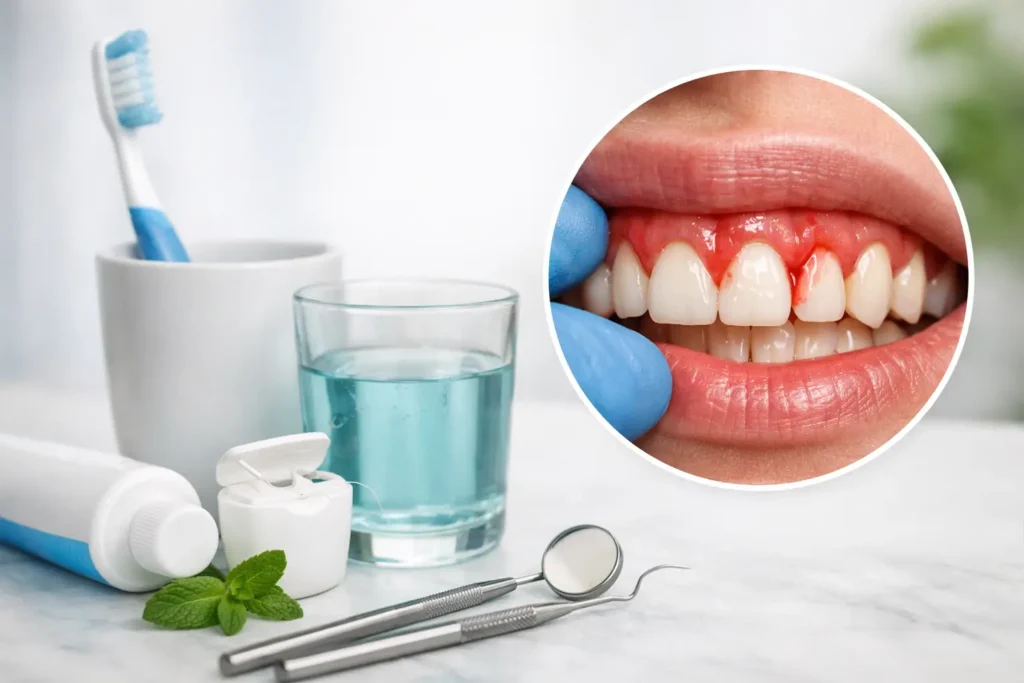
You spit into the sink, see pink in the foam, and immediately wonder whether you brushed too hard or something more serious is going on. If you are searching for how to treat bleeding gums, the first thing to know is this: occasional irritation can happen, but bleeding gums are not something to ignore. Healthy gums generally do not bleed during normal brushing or flossing.
In many cases, bleeding is an early warning sign that your gums are inflamed. The good news is that early gum problems are often very treatable. The key is knowing what you can do at home, what may be making the problem worse, and when it is time to get professional care.
How to treat bleeding gums at home
If your gums have started bleeding, gentle and consistent care is usually the best first step. Many people respond by brushing less or avoiding flossing because they are worried they are causing damage. That often backfires. When plaque stays along the gumline, inflammation can get worse, and the bleeding may continue.
Start by brushing twice a day with a soft-bristled toothbrush. Use light pressure and small circular motions rather than scrubbing back and forth. Aggressive brushing can irritate gum tissue, especially near the gumline, so technique matters more than force.
Floss once a day, even if your gums bleed at first. If you have not flossed regularly in a while, mild bleeding for a few days can happen as inflamed tissue begins to respond. What you want to see is improvement, not ongoing or heavier bleeding. If standard floss is difficult, floss picks, a water flosser, or interdental cleaners may help you be more consistent.
Rinsing with warm salt water can also soothe irritated gums. It will not remove plaque or cure gum disease, but it may calm inflammation and make your mouth feel more comfortable while you improve your routine. Staying hydrated helps too, especially if dry mouth is contributing to irritation.
If your toothbrush is old, replace it. Worn bristles do a poor job cleaning and can be rough on your gums. It is also worth taking a look at any recent changes in your oral care products. A whitening toothpaste that feels too harsh, or a mouthwash with a high alcohol content, may be irritating sensitive tissue.
The most common reason gums bleed
For most people, the answer is gingivitis. This is the earliest stage of gum disease, and it happens when plaque builds up around the teeth and gumline. Your body reacts to that buildup with inflammation, which can make the gums look red, puffy, tender, and prone to bleeding.
Gingivitis is common, but it should still be taken seriously. Left alone, it can progress into periodontal disease, which affects the deeper structures that support your teeth. At that point, treatment becomes more involved, and the long-term risks are higher.
That said, not every case of bleeding gums means advanced disease. Sometimes the issue is local and temporary, such as a piece of food trapped near the gumline, a new flossing habit, a rough brushing technique, or irritation around a dental restoration. The challenge is that these causes can look similar at home, which is why persistent symptoms deserve a professional evaluation.
What makes bleeding gums more likely
Plaque buildup is the biggest factor, but it is not the only one. Hormonal changes during pregnancy, certain medications, smoking, uncontrolled diabetes, vitamin deficiencies, and dry mouth can all increase gum sensitivity or inflammation. Even stress can play a role by affecting immune response and oral hygiene habits.
If you wear aligners, retainers, or dentures, fit and hygiene matter. Appliances that trap plaque or rub the gum tissue can contribute to bleeding. The same goes for crowded teeth, where cleaning between certain areas is simply harder.
There is also a difference between occasional mild bleeding and bleeding that seems to happen every time you brush, floss, or eat. Frequency matters. So does whether your gums are pulling away from your teeth, whether your breath stays bad despite brushing, or whether your teeth feel more sensitive or loose.
When home care is enough and when it is not
If the bleeding is mild, started recently, and seems related to a lapse in flossing or an overly aggressive brushing habit, a week of careful home care may be enough to calm things down. During that time, be consistent, not forceful. Better technique usually helps more than more products.
If the bleeding continues beyond about a week, gets worse, or is paired with swelling, gum recession, pus, pain, or persistent bad breath, it is time to see a dentist. Bleeding that starts easily and does not improve can signal infection below the gumline that home care cannot fully reach.
This is especially true if it has been a while since your last cleaning. Hardened plaque, called tartar, cannot be brushed or flossed away at home. Once it forms, professional cleaning is needed to remove it safely.
How dentists treat bleeding gums
The right treatment depends on the cause. If gingivitis is the issue, a professional cleaning combined with improved home care may be enough to get your gums back to health. Your dental team may also show you how to clean more effectively around the areas that are bleeding.
If gum disease has progressed, deeper treatment may be recommended. This often involves scaling and root planing, which removes plaque and tartar from below the gumline and smooths root surfaces so the gums can heal more effectively. In some cases, follow-up visits are needed to monitor healing and control inflammation.
Your dentist may also look for contributing factors such as a rough filling edge, a poorly fitting crown, bite issues, dry mouth, or medical conditions affecting gum health. Good care should never feel rushed or one-size-fits-all. Bleeding gums are a symptom, not a final diagnosis, so the best treatment is the one that addresses the reason they are happening.
What not to do if your gums are bleeding
Do not stop brushing. Do not stop cleaning between your teeth. And do not assume mouthwash alone will fix the problem. These are common reactions, but they usually delay healing.
It is also wise not to self-diagnose for too long. Online advice can be useful for first steps, but if your symptoms are sticking around, a professional exam gives you clarity. That matters because early treatment is usually simpler, more comfortable, and less expensive than waiting until symptoms become harder to ignore.
Be cautious with hard-bristled brushes, abrasive whitening products, and home remedies that promise quick results. Inflamed gums need gentle care, not harsh treatment.
How to prevent bleeding gums from coming back
Once your gums improve, prevention comes down to consistency. Brush twice daily with a soft brush, clean between your teeth every day, and keep up with regular dental cleanings and exams. If one area keeps bleeding, that is often a sign that your technique needs adjustment or that plaque is collecting where you are missing it.
Lifestyle habits matter too. Smoking increases the risk of gum disease and slows healing. Managing blood sugar can improve gum health if you have diabetes. Eating a balanced diet and drinking enough water support the tissues in your mouth more than many people realize.
For families, prevention also means not normalizing gum bleeding in children, teens, or adults. It may seem minor, but healthy gums are part of whole-mouth health. Catching changes early helps protect teeth, bone, and comfort over time.
At A+ Family Dental Solutions, this is the kind of concern we take seriously without making patients feel alarmed. Bleeding gums may have a simple explanation, or they may be an early sign that your mouth needs more support. Either way, you deserve clear answers, respectful care, and treatment recommendations you can trust.
A little blood in the sink should not become your new normal. If your gums are asking for attention, listening early is one of the kindest things you can do for your smile.