You notice a little blood when you spit after brushing. Maybe your gums look puffy, or your breath has been off lately even though you brush every day. It is easy to hope it will pass on its own, but many patients ask the same question at that point: can gum disease be reversed? The honest answer is yes in some cases, but it depends on how early the problem is caught.
Gum disease does not usually start with dramatic pain. It tends to begin quietly, which is why people often miss the early signs. The good news is that early-stage gum disease can often be reversed with the right care. Once it progresses to a more advanced stage, the goal shifts from reversal to control and long-term protection.
Can Gum Disease Be Reversed in Every Stage?
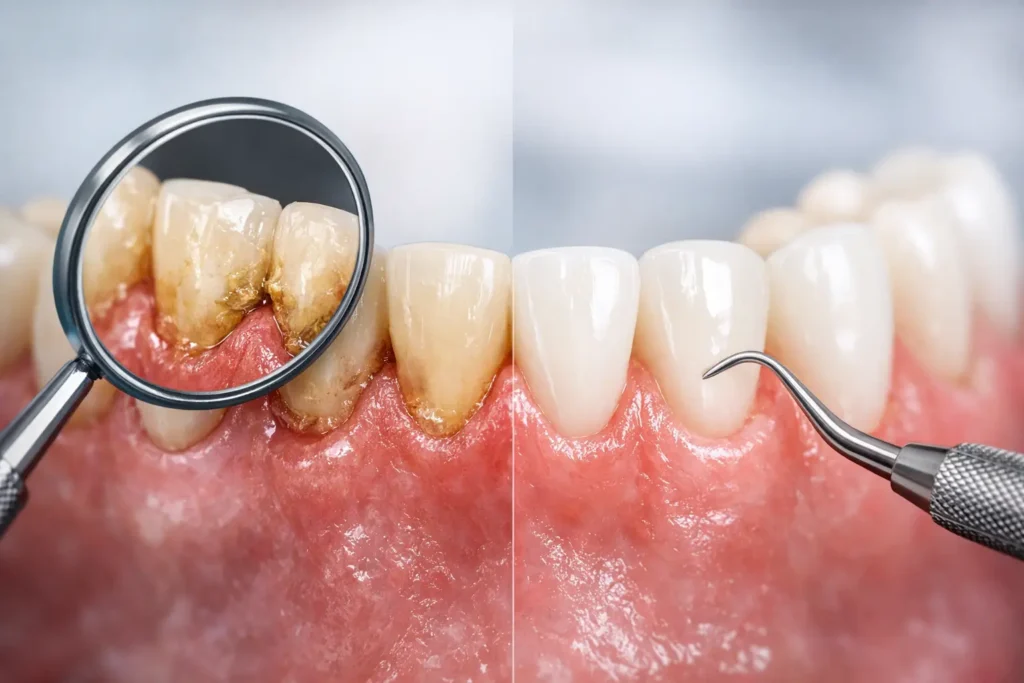
Not every stage of gum disease behaves the same way. In its earliest form, called gingivitis, the gums become inflamed because plaque builds up around the teeth and along the gumline. You may notice redness, tenderness, swelling, or bleeding when brushing and flossing. At this stage, the bone and connective tissue that support the teeth have not yet suffered permanent damage.
That distinction matters. Gingivitis can often be reversed when the bacteria and plaque are removed consistently and thoroughly. Better brushing, daily flossing, professional cleanings, and improved home care can allow the gums to heal.
Once gum disease advances into periodontitis, things change. Periodontitis means the infection has moved deeper below the gumline and has started to damage the supporting structures around the teeth. Pockets can form between the teeth and gums, bone loss can begin, and gums may start to recede. That damage is not considered fully reversible in the same way gingivitis is. It can, however, be treated and managed very successfully.
So if you are wondering whether gum disease can be reversed, the short answer is this: gingivitis often can, periodontitis cannot be fully undone, but it can be controlled before it leads to tooth loss or more serious problems.
What Reversible Gum Disease Looks Like
Early gum disease rarely feels urgent, which is part of the problem. Many people expect a major toothache if something is wrong, but gum disease often starts with signs that seem minor.
You may see blood in the sink after brushing. Your gums may look darker red instead of healthy pink. They might feel sore when you floss, or look slightly swollen near certain teeth. Some patients notice persistent bad breath or a bad taste in the mouth. Others have no symptoms they recognize at all until their hygienist points it out.
When these signs are caused by gingivitis, there is a real opportunity to turn things around. The inflammation is a response to bacterial buildup. Remove the cause, and the tissue often improves.
That said, reversal does not mean one extra brushing session fixes everything. The gums need time, and your home care needs to be effective, not just well-intentioned. If plaque has already hardened into tartar, you cannot remove it with a toothbrush alone. That is where professional care becomes important.
When Gum Disease Is No Longer Reversible
As gum disease progresses, it moves below the surface. The gums can start to pull away from the teeth, forming spaces where bacteria collect. Those pockets are difficult to clean at home, so the infection continues unless it is treated. Over time, the supporting bone can begin to break down.
This stage is more serious, but it is not hopeless. Patients sometimes hear they have periodontitis and assume tooth loss is inevitable. That is not true. With early diagnosis, proper treatment, and regular maintenance, many people keep their natural teeth for years.
The key is not waiting. The longer advanced gum disease is left alone, the harder it becomes to stabilize. Treatment may involve a deep cleaning called scaling and root planing, more frequent periodontal maintenance visits, or other therapies depending on the severity of the infection.
What Helps Reverse Early Gum Disease
If your gums are in the gingivitis stage, treatment is often straightforward but requires consistency. A professional cleaning removes plaque and tartar you cannot reach at home. After that, daily habits become the deciding factor.
Brush gently twice a day with a soft-bristled toothbrush and fluoride toothpaste. Floss once a day, making sure you are cleaning under the gumline rather than snapping the floss quickly between teeth. If your dentist recommends an antimicrobial rinse, use it as directed. In some cases, switching techniques matters just as much as brushing more often.
It also helps to look at the bigger picture. Smoking and vaping can make gum problems worse and slow healing. Dry mouth can increase bacterial buildup. Conditions such as diabetes can affect how easily your gums become inflamed and how well they recover. Hormonal changes, certain medications, and stress can also play a role.
This is where personalized dental care matters. Two patients may both have bleeding gums, but the reasons behind it and the best approach forward may be different.
Professional Treatment Makes a Difference
One of the most common misconceptions about gum disease is that brushing harder will solve it. In reality, aggressive brushing can irritate the gums further, and it still will not remove tartar below the gumline.
A dental exam can tell the difference between mild, reversible inflammation and a more advanced condition that needs deeper treatment. Your dentist or hygienist may measure the spaces around the teeth, check for bleeding points, take X-rays if needed, and evaluate whether any bone loss is present.
If the issue is gingivitis, a routine cleaning and improved home care may be enough. If periodontitis is present, deeper cleaning may be recommended to remove bacteria and buildup from below the gums. In some cases, ongoing maintenance visits are the best way to keep the condition stable and prevent progression.
At a relationship-centered practice like A+ Family Dental Solutions, that conversation should feel clear and respectful, not rushed or pressure-filled. Patients deserve to understand what is happening, what can be reversed, and what can be managed.
Why Early Action Matters More Than Perfect Teeth
Some patients delay treatment because they feel embarrassed. They think they should have flossed more, scheduled sooner, or paid closer attention. But gum disease is common, and shame does not help healing.
What does help is catching the problem before it causes permanent damage. Early action can mean the difference between a standard cleaning and more involved periodontal treatment. It can also reduce the risk of loose teeth, gum recession, chronic inflammation, and costly restorative work later.
There is also a comfort factor. Many people assume gum treatment will be painful or overwhelming. In reality, early care is usually simpler, faster, and easier than people expect. Waiting tends to make things more complicated, not less.
How to Lower Your Risk of Gum Disease Coming Back
Even when early gum disease is reversed, it can return if the conditions that caused it are still there. Plaque starts forming again every day, so healthy gums depend on ongoing maintenance.
That does not mean perfection. It means consistency. Keep up with regular checkups and cleanings, use good brushing and flossing technique, and pay attention to changes like bleeding, tenderness, or persistent bad breath. If you wear clear aligners, retainers, bridges, or other dental appliances, keep them clean as well. These can trap bacteria if they are not maintained properly.
If you have a history of gum disease, your dentist may recommend more frequent maintenance visits. That is not a sign you have failed. It is often the best way to protect your teeth and avoid future progression.
So, Can Gum Disease Be Reversed?
Yes, but timing matters. Gingivitis, the earliest form of gum disease, can often be reversed with professional care and strong home habits. More advanced gum disease cannot be fully reversed because damage to bone and supporting tissue is permanent. Still, it can often be treated successfully and kept under control.
If your gums bleed, feel tender, or look swollen, do not wait for pain to tell you something is wrong. Gum disease is much easier to handle when it is caught early, and your gums have a better chance to heal when you give them attention now rather than later.
A healthy smile is not about being flawless. It is about noticing the small signs, getting honest guidance, and taking the next right step while the problem is still manageable.